Imagine yourself as a student in middle or high school. “I’m not a good reader,” you tell yourself every day you’re asked to read a novel, a scientific passage, a first hand historical account. You can sound out some of the words, but you know you’re slower than your friends. You often feel frustrated because you want to keep up in class and you have lots of ideas and questions to share during group discussions. But, with each increasingly difficult text, it gets harder to follow along, harder to contribute in class, and easier to give up.
For many students, this struggle didn’t begin in adolescence. Research shows that reading ability in first grade is a strong predictor of reading outcomes in high school. When students don’t get the support they need early on, difficulties with decoding, language, and comprehension can build year after year. By the time students reach later grades and texts turn even more complex, students may want to avoid reading.
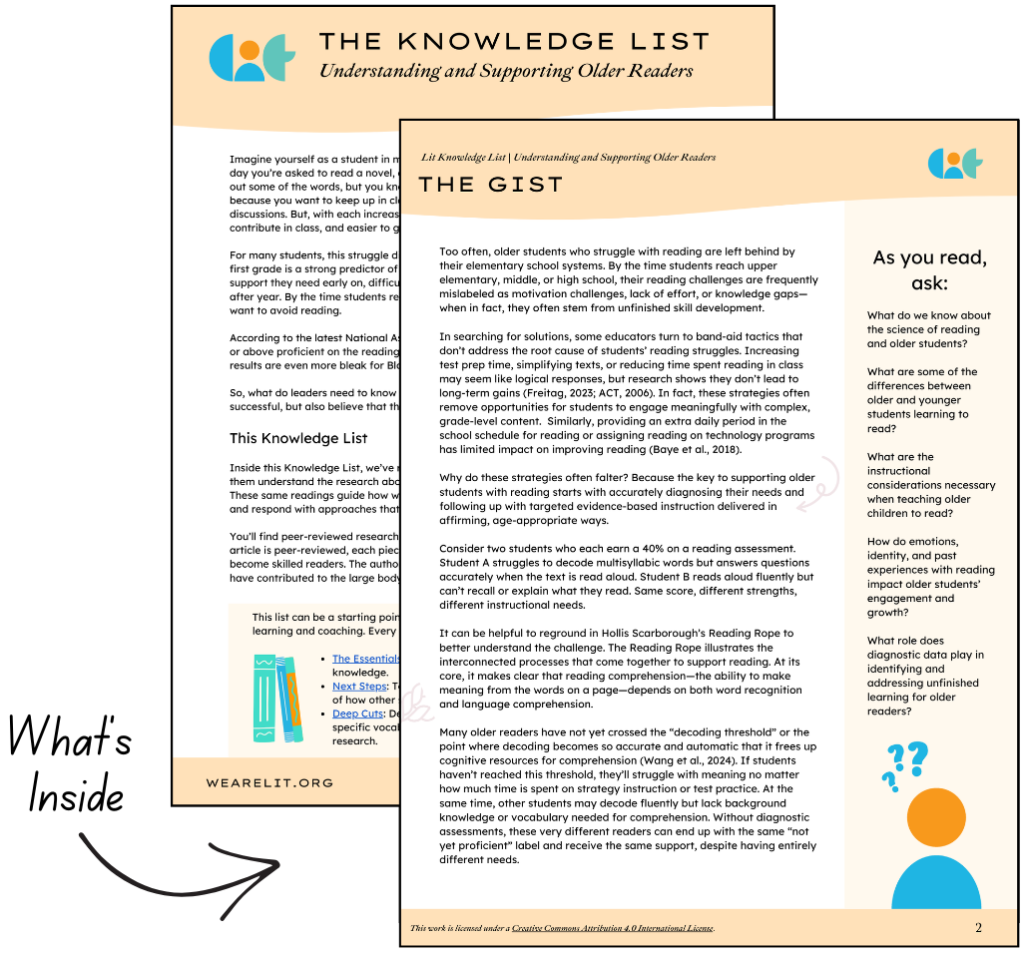
Inside this Knowledge List, we’ve rounded up the resources that we use every day with leaders to help them understand the research about supporting older students who are not yet proficient readers. These same readings guide how we coach leaders to diagnose the unique needs of adolescent readers and respond with approaches that support, honor, and engage them. You’ll find peer-reviewed research, articles by experts, and insights from educators.